Humphry Osmond
How to Change Your MindHumphry Osmond was a British psychiatrist and a pivotal figure in psychedelic research, helping transform LSD from a proposed model of psychosis into a treatment whose effects depended on experience, setting, and the relationship between therapist and patient. His work in Saskatchewan with Abram Hoffer produced an influential approach to alcohol dependence and helped establish the principles of psychedelic therapy, even as Osmond resisted abandoning clinical inquiry for the cultural revolution that some of his colleagues sought.
Identity and the Saskatchewan Research Hub
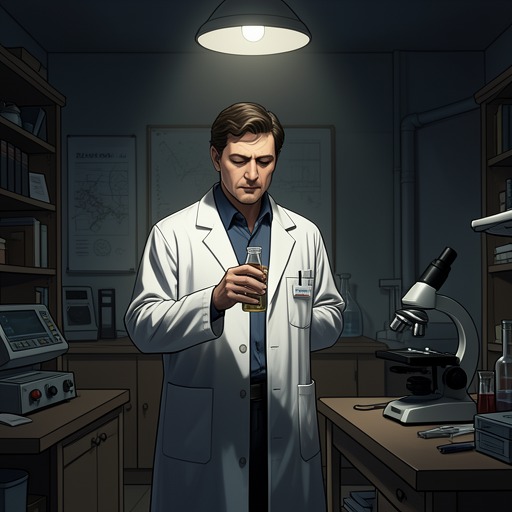
Born in Surrey, England, in 1917, Osmond practiced psychiatry at St. George’s Hospital in London after World War II. The book portrays him as tall and reedlike, with conspicuously unruly teeth, but his significance lay in a willingness to entertain a radical explanation of mental illness. A colleague, John Smythies, introduced him to medical writing on mescaline, whose hallucinations resembled experiences reported by people diagnosed with schizophrenia. The two psychiatrists noticed that mescaline’s molecular structure resembled adrenaline and hypothesized that a disturbance in adrenaline metabolism might produce a compound responsible for schizophrenia’s rupture with reality.
That biochemical explanation proved wrong, but the inquiry helped advance a new way of thinking about mental illness. At a time when brain chemistry had not yet become an established account of psychiatric disorders, Osmond’s investigations contributed to the rise of neurochemistry in the 1950s. LSD research would further strengthen the emerging field: the drug’s powerful effects at extremely small doses suggested that neurotransmitters and dedicated receptors could help organize mental experience. This line of inquiry eventually contributed to the discovery of serotonin and the development of selective serotonin reuptake inhibitors.
The leadership at St. George’s did not support Osmond’s mescaline research, so he sought an institution more willing to take it on. Saskatchewan offered an unusually hospitable setting. Its left-leaning provincial government had introduced major public-policy reforms, including Canada’s first publicly funded health-care system, and sought to make the province a center of advanced medical research. Its generous support and freedom for researchers helped draw Osmond and his family to Weyburn, Saskatchewan, a remote agricultural community forty-five miles north of the North Dakota border. The Saskatchewan Mental Hospital in Weyburn became a major center for psychedelic research, then generally framed as research into psychotomimetic drugs: substances understood as mimicking psychosis.
Osmond and Hoffer began experiments with LSD-25 supplied by Sandoz within that framework. The model reached a broad audience in 1953, when the Canadian magazine Maclean’s published Sidney Katz’s account of taking LSD at the hospital, titled My 12 Hours as a Madman. Katz had been led to expect madness, and his report included terrifying transformations of familiar faces and surroundings. Yet even his account included visions he described as dazzlingly beautiful. That mixture of horror and rapture foreshadowed the mismatch that would unsettle the researchers’ expectations.
From Psychosis Model to Alcohol Treatment
Osmond and Hoffer administered LSD to dozens of people, including colleagues, friends, relatives, volunteers, and themselves. Their initial interest was the drug’s value as a window into the biochemistry of mental illness; gradually, they became interested in the experience itself and whether its disruptive effects could have therapeutic value. In 1953, during a late-night discussion in an Ottawa hotel room, they connected LSD’s effects with delirium tremens, the severe hallucinations and madness that can accompany alcohol withdrawal. Some people recovering from alcoholism understood their experience of delirium tremens as a conversion ordeal, one that contributed to a spiritual awakening and helped them stay sober.
The resulting proposal was stark: a single high-dose LSD session might simulate delirium tremens and shock an alcoholic into sobriety. Over the following decade, Osmond and Hoffer tested the approach on more than seven hundred alcohol-dependent people. They reported that roughly half became sober and remained so for at least several months, and regarded the results as better than those of other available therapies. The lasting innovation was not simply the use of a powerful chemical. Hoffer later emphasized that they had treated the experience, rather than the drug alone, as a key therapeutic factor. That principle became central to psychedelic therapy.
The approach also restored subjective experience to a psychology increasingly shaped by behaviorism, which privileged observable outcomes and treated the inner life as inaccessible or scientifically irrelevant. Psychedelic treatment required researchers to listen to what participants said they had undergone. LSD thus became an unlikely route back to questions of consciousness and interior life: a chemical intervention made subjective experience part of the evidence rather than dismissing it as a black box.
The participants’ reports, however, undermined the theory that had inspired the treatment. Some described hallucinations, paranoia, and anxiety, but many reported experiences unlike either delirium tremens or ordinary ideas of madness: a feeling of unity with the world, heightened sensory perception, greater self-objectivity, insights into philosophy or religion, and increased sensitivity to other people. For many alcohol-dependent patients, the experience seemed closer to transcendence or spiritual revelation than temporary psychosis. Osmond and Hoffer consequently began to question both the delirium-tremens explanation and the psychotomimetic paradigm itself. Aldous Huxley’s mescaline experience reinforced their doubts: what psychiatry might classify as depersonalization, hallucination, or mania could, they considered, be better understood as mystical union, visionary experience, or ecstasy.
The Session as a Therapeutic Setting
Osmond and Hoffer also learned that the circumstances of a session could shape what happened. A calm, supportive environment and an engaged, empathetic therapist could help avert a difficult experience; ideally, the therapist had taken LSD as well. They suspected that some psychotic reactions might be encouraged by the stark, impersonal setting of a white room and white-coated clinician. The terminology of set and setting would become associated with Timothy Leary’s later work at Harvard, but Osmond and Hoffer were already recognizing how strongly expectation and environment could influence treatment.
The new therapeutic model took form in the mid-1950s through Osmond’s exchanges with Huxley and Al Hubbard. In 1956, correspondence between Osmond and Huxley produced the word psychedelic, formed from Greek elements meaning mind-manifesting. Osmond valued its relative neutrality: it did not define the experience as madness or ecstasy, but suggested an enlargement of the mind. The term would later acquire associations with the 1960s that its inventor had not intended.
In the practice Osmond and his colleagues developed, a typical treatment involved one high-dose session, usually with LSD, in comfortable surroundings. The participant reclined on a couch, often wearing eyeshades and listening to music, while one or two therapists remained present but spoke little. Rather than directing the experience through continuous conversation, the arrangement allowed it to unfold according to its own course. The intended outcome was a powerful, potentially transformative experience resembling a conversion. Osmond and Hoffer were identified with this model, but they credited Hubbard with important elements of its design. A treatment room arranged to feel homelike rather than institutional became known as a Hubbard Room; some researchers later argued that the therapeutic protocol might more accurately be called the Hubbard method.
That model unsettled established psychiatry. Compared with psychotomimetic research, or psycholytic treatment used as an adjunct to psychoanalysis, psychedelic therapy was harder to fit into existing professional categories. It proposed a single high-dose session in place of prolonged weekly therapy, and a conversion experience that altered familiar roles of patient and therapist. Its spiritual dimensions also blurred distinctions between religion and science, sickness and health, and healer and sufferer. With the importance it gave to setting and the therapist’s presence, it approached practices that academic psychiatry could regard as uncomfortably close to shamanism.
Hubbard, Huxley, and the Limits of Medical Authority
Osmond’s partnerships with Huxley and Hubbard exposed a tension within the work: whether psychedelic experience should remain a subject of medicine or become a means of transformation beyond it. Huxley believed that the experience opened access to a profound unity and should not be limited to experimentation or the treatment of sick people. Osmond was sympathetic to Huxley’s position and participated in sessions organized by Hubbard, but he was not ready to leave science and medicine behind.
In 1955, Hubbard established the Commission for the Study of Creative Imagination, seeking to extend psychedelic work beyond medicine’s focus on illness. He recruited Osmond, Hoffer, Huxley, Sidney Cohen, other researchers, philosopher Gerald Heard, and a United Nations official to its board, while naming himself scientific director. Osmond responded indulgently when Betty Eisner raised concerns about Hubbard’s self-presentation, suggesting that an explorer need not be wholly scientific or detached. Yet the commission’s existence signaled a growing divide between a medical approach and a spiritual one. Cohen resigned in 1957, while Hubbard increasingly described his own goal as something beyond empirical manipulation. Osmond’s participation did not erase his commitment to clinical research; it placed him at a crossing point between medical practice and a wider search for cultural change.
That commitment shaped his response to Leary. Osmond and Hoffer feared that Leary’s public promotion of psychedelics outside clinical research would provoke government action and damage their own work. Osmond objected that Leary was operating without a psychopharmacologist and treating powerful drugs as harmless. He also worried that the counterculture was changing the meaning of the word psychedelic, which he had chosen for its neutrality. His attempt to replace it with psychodelytic did not catch on.
When Osmond traveled to Cambridge after Leary announced the International Federation for Internal Freedom, he tried to persuade him to address the objections rather than brush them aside with a smile. Leary offered little more than that smile. Osmond’s concern was not simply a dispute over temperament: he and Hoffer believed that public experimentation threatened the conditions under which legitimate research could continue. Huxley, though attracted to the prospect of cultural transformation, likewise worried that Leary was moving too quickly and too conspicuously. In Osmond’s later account, both Huxley and Hubbard thought Leary underestimated the inertia of American society and that gradual, inconspicuous work within existing institutions had a better chance of changing it. Leary, by contrast, believed change could be taken by storm.
The disagreement became more than theoretical. According to Osmond, during a psychedelic session shared with Hubbard amid the mounting controversy, Hubbard became preoccupied with the idea of shooting Leary; when Osmond tried to reason with him, he grew concerned that Hubbard might shoot him instead. The episode shows how sharply the competing approaches had divided people who had helped build the same field. Osmond stood between Hubbard’s conservative distrust of Leary’s publicity and Leary’s rejection of the scientific constraints Osmond was trying to preserve.
A Divided Legacy
Osmond’s work endured both through the medical record and through practices passed beyond formal institutions. Decades later, the underground network of psychedelic guides described in the book drew on accumulated knowledge attributed to pioneers including Osmond, Hubbard, Leary, Myron Stolaroff, Stanislav Grof, and Leo Zeff. Its protocols and ethical codes emphasized preparation, the conditions of the session, the guide’s responsibility, and post-session integration. That later culture was not simply an extension of clinical medicine, but it preserved the insight Osmond and Hoffer had reached: a psychedelic session could not be understood by isolating the chemical from the experience and the circumstances surrounding it.
In February 1979, Osmond joined many of the first wave of American psychedelic researchers at Oscar Janiger’s Los Angeles home. A videotape records him among Sidney Cohen, Stolaroff, Willis Harman, Leary, and Hubbard, who sat beside Leary looking uncomfortable. The gathering carried the weight of a project that had been badly damaged, alongside the belief that it had nonetheless accomplished something. Cohen recalled that the work had unsettled people’s frames of reference on a vast scale. When Leary asked whether mistakes had been made, Osmond declined the word. He said instead that other ways of doing things could have been seen.
Stolaroff then confronted Leary about conduct that had made legitimate research harder to continue. Leary answered that he had played a different role, going far enough out to give researchers at Spring Grove room to appear responsible by contrast. Cohen accepted the possibility that the field needed people who pushed beyond accepted limits as well as people such as Osmond who reflected and studied. In that exchange, Osmond’s career came into focus not as a simple victory for either science or spirituality, but as work carried out between them: an effort to investigate transformative experience without pretending that it was only a chemical effect, and without surrendering the inquiry to spectacle. His caution did not prevent him from helping create a therapy that challenged psychiatry’s assumptions; it was precisely the tension between those commitments that gave his contribution its lasting shape.